The Cornell 7 Problem
Learning about the Cornell 7 felt heavy. The information was coming in fast. I doomscrolled through a mix of triggering truths, people’s own account of assault, and a lot of public outrage. I laid in bed and spiraled for a few days trying to process this new American development.
On October 19, 2024, a 20 year old female Cornell University student and Delta Delta Delta sorority member attended a social event at a local bar in Ithaca, New York, after having several alcoholic drinks at her sorority house. After a stop at another bar, the 20 year old female, known as “Jane Doe” walked to the Chi Phi fraternity house to visit Matthew Ingalls. He welcomed her with a beer and proposed that she engage in sexual activity with him and Jonathan Newell.
In a civil suit filed on September 16, 2026, Jane Doe claims that prior to engaging in sexual activity with the two men on the night of October 19, she had consumed large amounts of alcohol, marijuana, and pressured to take ketamine, an analgesic and hallucinogen that is medically used for anaesthesia, depression, and pain management. She also states that she sexually engaged with a third man, Gillio Lopes.
At around 1:42 AM, several highly inappropriate messages were sent by Jonathan Newell in a Snapchat group with 57 members called “Chi Phi Actives,” advising the “actives” about “free pussy” upstairs. The invite was met with appalling replies and resulted in other intoxicated men in the room with her, where she expressed her discomfort and embarrassment.
Following the events, Jane Doe maintained friendly exchanges with Matthew Ingalls. That is until she came across online comments referencing the activities that involved her on the night of the party. As rumors started spreading across campus, she had received a phone call from the fraternity president to formally exclude her from the Chi Phi Halloween party. On November 3, she texted two of the accused men and alleged that “90% of what had happened that night was non-consensual”.
With the encouragement of her friends, Jane Doe reported the incident to Cornell University Police on November 8, 2024. Cornell University immediately suspended the Chi Phi chapter and the seven members implicated in the reporting. After reviewing a summary of a 120-page document that included transcripts that took place regarding the incident, the Tompkins County district attorney, Matthew Van Houtten found that their wasn’t enough evidence to present the case to a grand jury. Her report to University Police also triggered a Title IX investigation.
Title IX is a federal law that was enacted as part of the Education Amendments of 1972. The law prohibits sex-based discrimination in any school or education program that receives funding from the federal government. This law has undergone a series of changes since its enactment in 1972. In the 1980s and 1990s, the U.S. Supreme Court issued decisions that made sexual harassment and assault a form of discrimination. This decision was later reinforced by the Obama administration, requiring U.S. schools to be more diligent in the investigation and resolution of all reports of sexual assault. In 2017, the United States Secretary of Education Betsey Devos rescinded the guidelines issued by Obama and implemented changes that placed protections for accused students. The new regulations reinstated requirements for live hearings in college sexual misconduct cases, which are known to discourage reporting of assaults because they re-traumatize victims. The biggest change, however, came through a calculating change of words regarding the standards of evidence. They changed the wording from “preponderance of evidence” to “clear and convincing evidence”, which makes the finding of responsibility far more difficult to reach. The Biden administration reversed these changes but they were later reversed again at the start of the second Trump administration.
Cornell began their formal Title IX hearings in January 2025 and concluded in May 2025. The findings were as follow:
- Matthew Ingalls, was found responsible for sexual assault and willingness to manipulate, exploit, and endanger Jane Doe for his own self-interest and entertainment of others. He was expelled from Cornell University.
- Jonathan Newell was also found responsible for sexual assault and expelled from the University.
- Winston Lee was issued a two year suspension and probation upon his return. He was mandated to study sexual harassment and write a reflection paper.
- Gillio Lopes was suspended for three semesters followed by two years probation. He was also mandated to study sexual harassment and write a reflection paper.
- Diego Sarabia had already graduated at the time of the hearings. He was barred from campus for three years.
- Scott Norris was accused of being part of the group of men who entered the room after reading Newell’s messages. He was ordered not to contact Jane Doe, to study sexual harassment, social media use and bystander intervention, and to write reflection papers. No further disciplinary actions were issued.
- Scott Kretzschmar had also entered the room after reading Newell’s messages on Snapchat and was found responsible for the lesser offense of attempted sexual exploitation. He also had to study sexual harassment, social media use and bystander intervention, and write reflection papers. No further disciplinary actions were issued.
On September 18, 2026, The Cornell Daily Sun, an independent, student led newspaper, broke the news on the Cornell 7 civil lawsuit with an editorial titled, “Cornell Won’t, We Will”. Senior Editor Cereese Qusba reported the story following a months-long investigation. The bold decision to publish the names of the accused men was made by Editor-in-Chief Sophia Dasser.
In the lawsuit filed against Cornell University, the university’s Chi Phi fraternity chapter, her sorority Delta Delta Delta, and Moonies Bar & Nightclub Jane Doe alleges that she was drugged and gang-raped by seven members of Cornell University’s Chi Phi fraternity chapter, and that Cornell University did nothing to protect her or hold the alleged perpetrators accountable. The criminal investigation has also been reopened. New York Governor Kathy Hochul has requested an independent review of Cornell University’s response to Jane Doe’s reporting. Hochul has appointed state attorney general Leticia James as a special prosecutor to the case.
All this information was coming in piecemeal over several days. The rage, sadness, and impotence kept growing inside of me with every new detail. It consumed me. This all felt familiar. About a decade ago we went through similar outrage, after the once powerful and celebrated film producer Harvey Weinstein was exposed for sexual abuse, harassment, and assault. The Weinstein case was the beginning of a string of high-profile figures who would also be held accountable for sexual misconduct, including Louis C.K, Matt Lauer, and Kevin Spacey. It gave rise to the #MeToo and Time’s up movements, viral campaigns that were named on behalf of survivors’ accounts of abuse. The Cornell 7 has a different tune. It isn’t a movement. It is a moniker for a case that is named after a prestigious institution and a select number of defendants. I also couldn’t help but notice the similarity in the naming with the Central Park 5; a group of five Black and Latino men that were wrongfully convicted in connection to the rape and assault of a woman jogging in Central Park. Still, the same rage, sadness, and helplessness.
I talk to people for a living, and on the Wednesday the news broke, the Cornell 7 became the topic of the day. Most of the people I speak to are foreign to the intricacies of United States culture. What they understand American culture to be is fast food, shopping, reality tv, guns, and celebrities. They aren’t attuned to the less shiny details like segregation, the electoral college, or fraternities, sororities, and college culture.
Living abroad and speaking to people from all over the world has given me a different perspective about American culture. I have had to explain things I had always taken as normal, like our over-enthusiasm, our obsession with identity, our electoral, education, and healthcare systems, and even food choices. Last week I added a new topic to the list: fraternities and sororities. It had never come up. I’ve spoken about the college admissions process, our moving-up and graduation ceremonies, and the importance of sports and extra-curricular activities, but the extra-curriculars specific to university campus life was an uncharted topic.
I went to college in a very small city nestled in the Catskill Mountains. It had a population of roughly 12,000 people, which included the student body of two colleges and a Job Corp. Coming in from New York City, I was having a hard time fitting in and adapting to small-town campus life. Most students were from suburban or rural towns and thought New York City was a scary place. After spending some time with them, I thought the same about their hometowns. Our idea of fun was completely different. They loved joy riding. Growing up with gridlock, a 35 mile an hour speed limit, a multitude of pedestrians, and loud honking sounds made it impossible for me to imagine driving around aimlessly for hours was any fun. They loved drinking and house parties. Everyone I knew growing up lived in apartments and there were no kegs or drinking games at the parties I went to.
Freshman year was rough. I had nightmares for first roommates, campus food was horrendous, and I was far away from everything familiar to me. I regretted the decision to ever leave New York City, and I learned rather quickly that alcohol was a great coping tool.
In an earlier reflection, I spoke about how hard adjusting to university campus life was for me. I explain how I used alcohol as a coping tool in this video.
The first time I had to explain what a fraternity and sorority is, was to my mom when I was a sophomore in college. I was longing for a community and a group of friends and wanted to join. I explained that I needed money to pay a fee to join a group of girls who focused on sisterhood and community service. I told her I wouldn’t be able to speak to her for a few weeks because I would be fully committed to my studies and later fulfilling my duties for the sister members in order to earn my place within the group. I also told her I would never be able to tell her what those duties were because I would be sworn to secrecy. I didn’t tell her that even after paying the dues and doing what I was told, I wouldn’t be guaranteed to cross and become part of the group.
Smart phones with video calling capabilities were not available at the time. This conversation happened over a corded dormitory telephone. I wish I could teleport myself back to this moment with my mom and instead be on her end so that I can see her face as I told her.
The first question she had was about the money. She asked what it would be for. I told her that the girls would get me some clothes, like t-shirts and things like that. If I had to translate what she responded into modern-day mom language, it would go something like this: “Darling, bribing people into being your friends sounds like a terrible idea. Adjusting takes time. You will meet friends and have your community in due time. In the meantime, focus on your studies. I love you and I will see you soon!” That was the message, except the original was in a really loud Spanish and in a tone that didn’t come off so affectionately.
Fraternal organizations are very much part of American culture. When George Washington was sworn into office as the first president of the United States of America on April 30, 1789, he took the oath by placing his hand over a Bible owned by a Masonic lodge in New York City. The oath was administered by Robert Livingston, a New York official who was also the first leader of New York State’s Grand Lodge of Freemasons. The connection between secret social organizations and power is a tale as old as time.
The original idea behind these social clubs was to gather professionals in order to protect trade secrets, promote self-improvement and charity, and provide a safe environment for intellectual discussion. Over time, these fraternal organizations have evolved to serve as social connectors of faith, cultural identity, and professional relationships to their adult members. Perhaps you have heard of a few: the Freemasons, the Knights of Columbus, Rotary International, Lions Club International. People usually gain access to these organizations through local chapters in their community, which are connected to bigger regional, national, and/or international networks. Generally, these organizations have been effective at carrying out their purpose, but this concept took on a life of its own in colleges and universities.
In the United States people usually enter higher education institutions at 17. Generally, if they’ve enrolled in a standard program, and if all goes well, they become alums by 21. It is an exciting time for most. For those who choose the dormitory life, it’s the first time they get to experience independence. Learning to share personal spaces, managing meal budgets, and adhering to less structured schedules than what they might have been used to in high school, are just a few of the challenges a 17 year old freshman might face. All of this while being expected to have the wisdom to choose a career path that will provide both personal satisfaction and economic stability.
They say that the friends you make in college become the family you choose (there must be a book dedicated to the ridiculous and overly optimistic things Americans say). In American colleges and universities, this idea is presented in an organized form through fraternities and sororities. These organized groups of men and women are named after three letters in the Greek alphabet, which are supposed to stand for the initials of a motto or a set of ideals that represent the group: Chi Phi, Delta Kappa Epsilon, Sigma Delta Tau, Sigma, Sigma, Sigma. Greek life, as the system is known, is fully recognized by college and university administrations. Some universities even have fraternity and sorority housing on campus.
The recruitment period, known as rush week, is held at the beginning of the semester. After going through rounds of information sessions and wild parties, the potential new members select their preferred organizations, and hope to be invited by receiving what is formally known as a bid. Once they accept a bid, they become pledges, and are expected to demonstrate their commitment to existing members. At the end of the pledging process, which can take anywhere between six to twelve weeks, they are formally initiated or crossed as formal members of the organization, provided they have satisfied the requirements.
In most fraternities and sororities, pledging is a humiliating and abusive experience. They operate under the idea that pain and suffering builds character, and is thus a good thing. Many young men and women have met their death by demonstrating their loyalty through outrageous challenges imposed by senior members. The Mutual Man on Instagram is a former college fraternity member who does a great job at explaining how these abusive practice, known as hazing, condition and reinforce power structures.
Members of fraternities and sororities form bonds with each other over traumatic and humiliating character-building exercises that are to be kept secret from those outside of the group. Abuse is normalized and hierarchies that enable a perpetual cycle of mistreatment are reinforced each semester. Members become desensitized to the abuse and practice solidarity by covering up for one another in the event someone speaks out against them.
College and university administrations are aware of the practices behind these organizations. Each semester they carry out orientation workshops for on-boarding students that provide prevention and awareness modules that address domestic and dating violence, sexual assault, and stalking. Little or nothing is done to remove Greek life from campus because these organizations have been proven effective at generating substantial sums of donations from alumni.
One of the promises of joining a fraternity or sorority is the large professional network you gain once you graduate. A long list of United States politicians and Fortune 500 executives have connections with these fraternal organizations. There is a direct connection between these organizations and positions of power, and bad habits are hard to break. Movements against harassment and abuse like #MeToo and Times Up came about because of the institutional complicity that allowed people in power to exploit others while institutions looked the other way.
Perhaps the name of the case, the Cornell 7, has given us a clue to how it will all end. But maybe this time we can take a closer look at how these nightmares begin.
Bendito Seas, Luis Miguel
Last week I found out that Luis Miguel will be returning to the stage. The very first thing I did after learning about his big return was to navigate to his Spotify profile, play the This Is Luis Miguel playlist, and listen to the first song on the the set, “La Incondicional.” As soon as I heard the song, I became that young girl with black bangs, wearing a bright purple t-shirt with a matching floral set over it and white Keds, that sang along, while secretly wishing her school crush was listening and thinking of her.
I am really excited about Luis Miguel’s upcoming tour. Not because I am his biggest fan. There are other 1990s Latin pop artists that had a much greater influence on me growing up, Selena or Carlos Vives, for example. I am excited becuase upon listening to his music this time around, I found myself in an open dialogue with that young girl who sang along with him.
Mexican pop culture was my main source of television entertainment while growing up, making Luis Miguel a familiar face. Televisa, Mexico’s largest broadcaster in the 1990s, had an exclusive programming agreement with Univision, el cuarenta y uno, as my mom and grandma would refer to it. I remember him as a child actor co-starring in movies with Lucero and making stellar performances on weekend variety shows like Siempre en Domingo with Raúl Velasco. As his fame and popularity grew, so did the tasteless comments and critiques.
The critiques were never about his talent. I don’t remember people ever having anything bad to say about how he sounded or how he performed. The comments always revolved around his attitude; it was always over how arrogant he was. At the time, his looks confirmed the banter. A tall, handsome, green-eyed, white guy with a tan, and the confidence to showoff the wide gaps on each row of his teeth was all the proof I needed to believe he was conceited—un creido.
The tight boundaries he maintained between his professional and personal life created a sore between him and his fans. We wanted it all. Entertainment and tabloid newspapers and magazines added to the injury. They were always trying to create speculation about his personal affairs: who he was dating, his children, his relationships with other artists, and of course his parents. But in my recent trip down the Luis Miguel rabbit hole, I realized he has been very generous with his fans. Perhaps he beat around the bush or gave unsatisfying answers, but he always answered and stood up for what he believed in.
The few times he agreed to interviews, they were always with prime time programs like Aquí y Ahora or television personalities with established and respected careers like Myrka Dellanos or Gloria Calzada. And even then, he couldn’t escape the intrusive or probing questions that sought to overreach their boundaries.
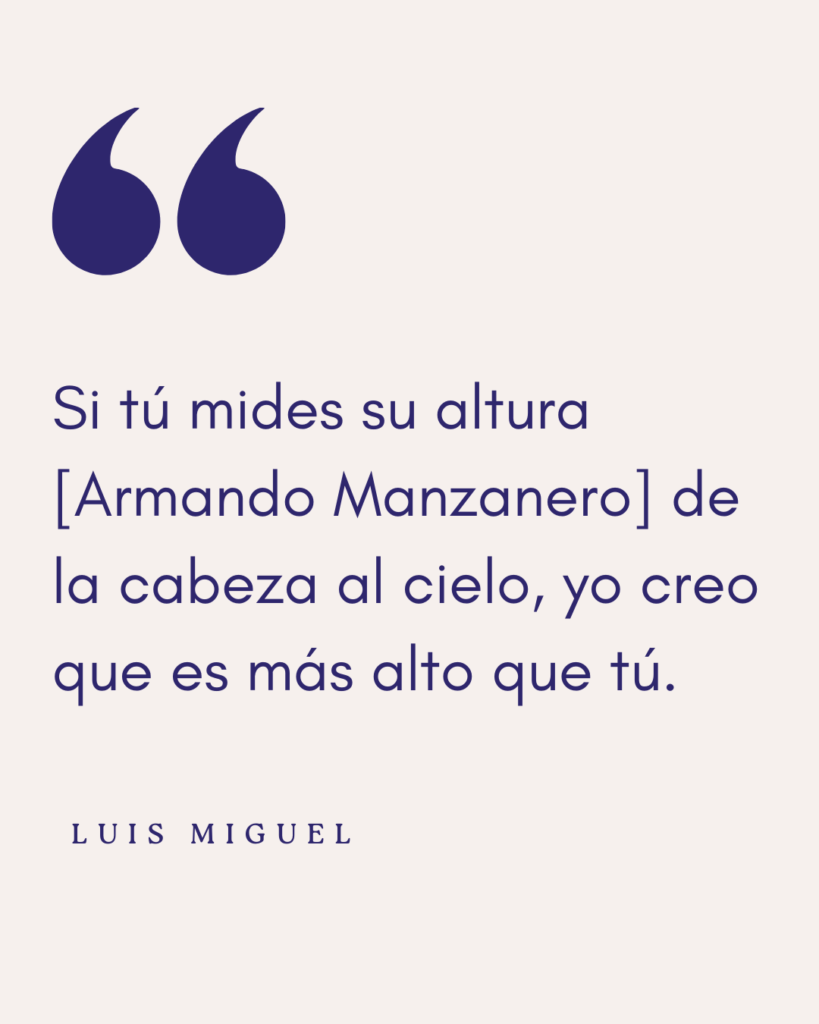
Luis Miguel was interviewed in Chile by Álvaro Salas and Cecilia Bolocco for a primetime television program called Viva el Lunes. He was baited several times by Álvaro Salas, including a probing question that attempted to trigger him to talk about his conflicted relationship with maestro Armando Manzanero.
Luis Miguel is the oldest of three children born to Spanish singer-songwriter, Luisito Rey and Italian model, Marcela Basteri. He was exposed to the limelight at a very early age. He learned, from his father I suppose, that some things are just nobody’s business. One of those things was the fact that he was born in San Juan, Puerto Rico. His father, was working on his music with some Puerto Rican producers when his mom went into labor. He would have otherwise been born in either Italy or Spain. But this was one of those personal things that were better kept private.
Mexico is a launchpad for Spanish singing artists. For those seeking success in the Latin music industry, Mexico is a proving ground. It’s geographic position, economic power, and its very North American passion for consumption, makes it an important hub in the entertainment industry. And so, shortly after Luis Miguel’s birth, Luisito decided to move to Veracruz in order to advance his artistic career. He failed. Miserably. His addiction problems and his swindling habits left him in an incredible amount of debt and without friends. But as his son grew older, he began to notice his potential and as a possible saving grace.
I think there is something sinister about having an artist as a parent when you yourself have artistic talent. Just like with Selena and Michael Jackson, his father abandoned his own career to manage and represent him. He made practice for hours and made him watch and study endless footage of Elvis Presley; his stage presence, his mannerisms, the way Elvis breathed while he sang. This effort wasn’t in vain, at age 14 Luis Miguel became one of the youngest people ever to win a Grammy.
Where we are born are cosas del destino. There are people that make entire careers out of making us believe that our fate is marked by the position of the Sun, Moon, and other planets and stars, in relation to the time and place we were born. And this is exactly how Luisito decided to embark on his newfound career as his son’s talent manager. He forged a birth certificate claiming that Luis Miguel was born in Veracruz. He understood that by making Mexicans believe Luis Miguel was one of their own, it would make it much easier for him to break into the competitive Mexican music scene.
I wish the girl in the purple outfit had known that just like her, Luis Miguel would be tormented by people’s obsession to know where he was really from. Because of course, a quote-unquote Puerto Rican can’t possibly be the interpreter of the best version of “La Bikina” ever to be recorded. He would be an appropriator of a culture—a fake, a wannabe. But how do you explain to people that your place of birth doesn’t always translate to your talents or place of belonging?
The idea of knowing where others come from gives us an illusion that we can understand who they are. It makes us think we know what to expect from them. In some cases, especially when it comes to race, it can become an attempt to create a sense of safety: if we can place someone racially, culturally, or geographically, we convince ourselves that we know who they are. The entertainment industry is completely aware of our tribalistic nature. Most of the time we are too busy to realize this.
The moguls know that most people aren’t able to accept talent for what it is. There must be a story that tells us why we should accept them. Whitney Houston is the first person that comes to mind when I think about industry marketing tactics. She was able to cross over from the Gospel and R&B genres to mainstream pop culture because her public image was shaped to White beauty standards: thin, relaxed hair and pastel make-up.
And to be fair, I’ve also seen racial opportunism or racial ambiguity take place in the entertainment industry. Some artists move towards a racial or cultural identity if they know it can give them access to an audience or other benefits. But I’ll leave that for another time.
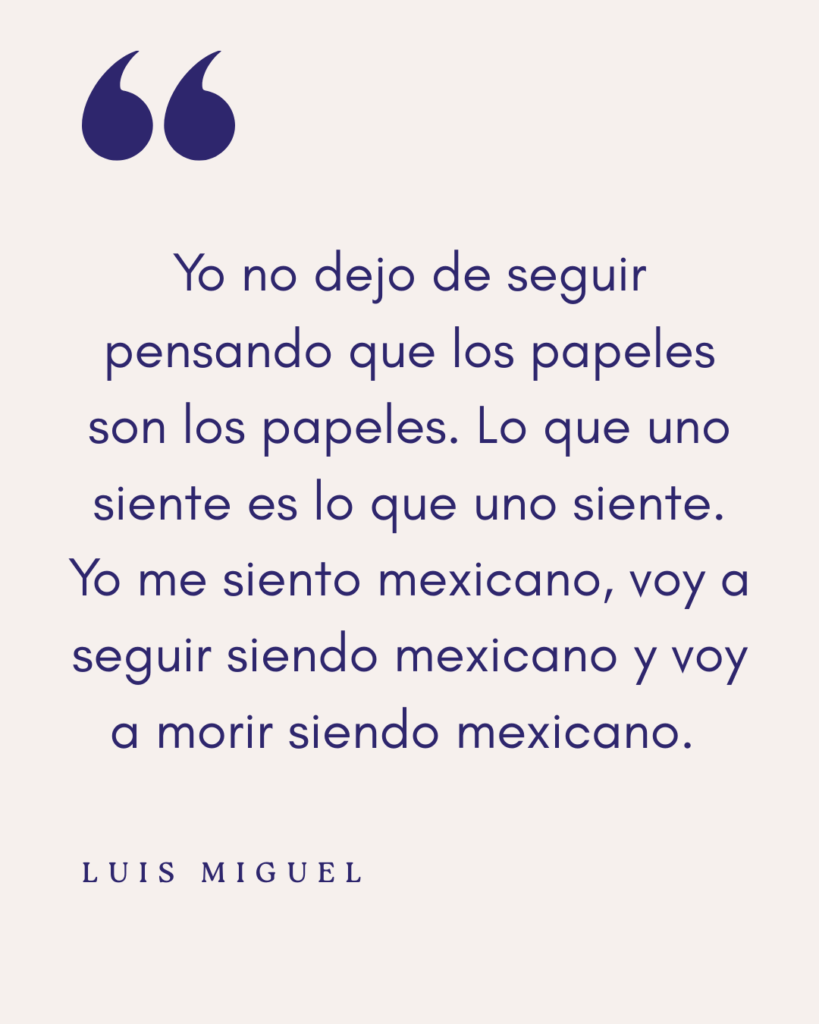
Rumors about Luis Miguel’s place of birth began to circulate around his fandom. His entire artistic credibility was on the line because someone had leaked a copy of his original birth certificate. El Sol de Mexico, as he became to be known, was at the verge of becoming a traitor (un falso), a forger (un delincuente), and an exploiter (un aprovechado) of Mexican culture.
Just like Mexican pop culture became the main source of entertainment for most Latino families in the United States, Mexican politics were also front and center stage. Carlos Salinas de Gortari is the first Mexican President I remember. His party, el PRI (Partido Revolucionario Institucional) governed Mexico for 71 years during which he served between 1988 and 1994. The party logo was displayed, and his name was mentioned daily on the evening television news programs I watched at home with my family.
Carlos Salinas de Gortari. I always thought he had an unsual name. It didn’t sound like any of the last names of people I knew. I felt that way with a lot of the Presidents from the 1990s: Fujimori, Menem, Bush, Clinton. Actually, not much has changed. It still happens to be the case.
Luis Miguel was at the peak of his popularity during the Salinas de Gortari administration. He dominated the Latin music charts, his record sales were unbeatable, and girls in the United States and Latin America went crazy for him. The Fernandez family (Vicente, Pedro, and Alejandro), Christian Castro, Mijares, Timbiriche, and Gloria Trevi, just to name a few, were contemporary pop artists to Luis Miguel in the 1990s. But Luis Miguel was more than a pop star. He was the man of the era. He moved masses around Latin America and the governement was well aware of his influence.
The current state of music videos really pale in comparison to those of the 80s and 90s. They were massive because most of them told a story. Michael Jackson, of course, was the best to ever do it with videos like “Scream”, “Thriller”, and “Do You Remember the Time”. They were also a perfect way to get a message across. Think of Public Enemy’s “Fight the Power” music video protesting instutional racism and police brutality or Lee Greenwood’s “God Bless the USA”, which was basically a military campaign during the 1991 Gulf War.
El PRI’s governorship was plagued with repression, corruption, and a what seemed to be a never ending electoral manipulation. Their government is marked by the Mexican Dirty War, a national conflict in which the government escalated the use of violent tactics to silence and repress their citizens. I have memories of news segments covering these acts. For some reason I can’t remember feeling the despair I feel when I watch similar coverage today.
By the time Salinas de Gortari’s assumed power in 1988, there was significant mistrust around the Mexican political system. Rebuilding people’s confidence in government was top of the order for his administration. The United States had already demonstrated the power of pop culture, with music and movies like Top Gun and Escape to Athena, to restore the public’s perception of the military following the disasterous Vietnamese War.
“La Incodicional” was the hit single of Luis Miguel’s sixth studio album, Busca una mujer. It is a romantic ballad about regret where the singer acknowledges that he took the woman’s “unconditional” love for granted. I must have been around six or seven years old when that song hit its popularity, and as the six or seven year old child I was, I had no business singing that song the way I did. The song served its purpose. It was an evocative primer in shaping the good girl I was supposed to become—unconditially always there.
The music video for “La Incondicional” was also a nudge toward what love and courage were supposed to look like. As we watched a young and handsome Luis Miguel enlist in the military to serve his country while the “love of his life” patiently waited for his return, we were shown what real character was all about. And it worked like a charm. A year after the video premier, Mexico had reported an all time record for voluntary military enlistment. And two years later, Luis Miguel would become a naturalized citizen of the United Mexican States.
I remember the Latin Explosion of the 1990s. What a time to be Latino. Two years prior to the start of the decade, Ronald Regan had officially declared September 15th the beginning of Hispanic Heritage Month. It was an expansion of Lyndon B. Johnson’s Public Law 90-498, which created the National Hispanic Heritage Week in 1968. Perhaps the US government realized the economic and political power that Hispanics held, and what better way to commemorate this than by dedicating a full month to the commercialization of our culture.
In this spirit, the 90s also brought us the Latin Grammys. An award ceremony that was created to celebrate Latin music and does everything but. During this time, many Latin artists had crossed over, which was the term that we use to describe when a non-English speaking artist successfully breaks into the Anglo-American mainstream market. We had several: Ricky Martin, Gloria Estefan, Jennifer Lopez, and Enrique Iglesias to name a few. Luis Miguel never made that list and he still became the king of the Billboard Latin Pop Album Charts. He had the most number one albums in the 1990s.
This was one of two things that solidified his image of being conceited or creido. He was adamant about singing in Spanish. When confronted by an American journalist about his choice not to cross over like others had done, he answered with pride, like a true Mexican would, “I like my language, I feel really proud of it. Other people are doing it. Why am I going to do it?” He didn’t need to change to earn acceptance from others, and this confidence is not always well recieved.
Luis Miguel also refused to attend award ceremonies. Although he was always a nominee, and often times a winner, he saw award shows for what they were: a popularity contest that had very little to do with what they were honoring, in his case, music.
Luis Miguel defined his own succes.
My love for music began with my mom. Music and sports have always been our thing. They are the two things that always brought us together no matter how upset we were at each other. She had a modest collection of vinyls that we would listen to on weekends. Most of it was tropical music: La Sonora Matancera, Lucho Bermudez, Joe Arroyo. She also had a few editions of los 14 Cañonazos from Discos Fuentes and of course El Binomio de Oro. I enjoyed all of it. But she had a few selections I really didn’t like; the alleged kings of bolero: Lucho Gatica, Roberto Ledesma, and Julio Jaramillo. She tried to sell it to me but was unsuccessful. The music felt distant, slow, cheesy, exaggerated, and annoying. Just looking at the vinyl sleeves would give me anxiety. It was usually the face of a smiling man in a bow tie, that I suppose was to be a heartthrob. It reminded me of the Ceshire Cat from Alice in Wonderland. I hated it.
One day, I can’t remember when or how exactly, I listened to Luis Miguel’s interpretation of “La Barca”. It must have been on one of those weekend variety shows. I was blown away. I loved the new Luis Miguel song and I showed it. I quickly learned from my mom it wasn’t a “new” song. It was a Lucho Gatica cover. I couldn’t believe it.
That seemed to be a recurring conversation with my mom. She had arrived to New York City in 1969. The trends from the 90s that were new to me, were not really new. It was all just a 70s repackage that she had already gone through: the flared jeans, the platform shoes, the bandanas and the tie-dye. It was a always a good time when the photo albums came out. It was like flipping through a fashion magazine where all the faces were familiar to me and they were all supermodels.
It wouldn’t be just one Lucho Gatica cover. Romances was Luis Miguel’s twelfth studio album, and what an album! It was realeased in 1997. They were all songs my mom already knew. We never got the vinyl because CDs had taken over but it closed that small gap that existed between what brought us together. It got us both singing, “Sabor a Mi”, “El Reloj”, “Besame Mucho”, and “La Gloria Eres Tú” and, I was discovering for the first time what my mother had always known.
Bendito seas, Luis Miguel.
The Latin Grammys Are Not a Latin Music Celebration
I think I have found interest in award ceremonies once again. I had lost interest in them since the internet makes it possible for us to curate what we want to see. Rarely did any artist I like make it to red carpet events. But given the fury Bad Bunny caused in the 2026 Grammy Award ceremony, I became interested in the ins and outs of these award ceremonies once again.
The Latin Recording Academy was formed in 1997 because the Latin music universe had grown too big to be celebrated within the standard Grammy Award ceremony. The first award show was held in 2000. Most people, myself included, would believe that the Latin Grammys or the Latin Recording Academy are a celebration of Latin music and culture, at least prior to doing some reading.
The Latino ethnicity is made up of various different elements of identity: race, tradition, music, and of course language. To my surprise, and I am sure that for you as well, the Latin Recording Academy chooses language, almost exclusively, as the qualifying element of Latino identity. Past award winners like Rosalia have been controversial because they do not meet what the Latino community understands as Latino. And I am sure that there will be future controversies because the wording in the Rules and Guideline manual allow for these situations to occur.
Since language is the main identity element that the Latin Recording Academy uses as the qualifying factor I had a lot of questions. The first is, aside from Spanish and Portuguese, how are other Latin American languages considered? What happens with genres such as Classical, Electronic, or Jazz that usually do not incorporate spoken language? What about the Production Field? What are the identity requirements for these categories?
The Latin Grammys will be celebrated on Thursday, November 12th at the MGM Grand Garden Arena in Las Vegas.
Watch my Latin Grammy qualification breakdown on YouTube.
One Month After…
Its been a month since a massive 7.4 earthquake shook the Pacific coast of Colombia. The disaster took place three days after a new political party, opposed to the previous administration, took office. In situations like this, the strategies and priorities should be simple: help those in need. Unfortunately politics get in the way of getting assistance to people who need it most.
To better understand what was happening on the ground, I invited Camilo Trujillo Arbeláez, better known as Cammigrant on Instagram, to talk about his crowdfunding initiative to support communities that, according to his reporting and firsthand experience, had yet to receive adequate assistance.
In our conversation, we discuss what happens when political and institutional realities affect the delivery of humanitarian aid, the challenges faced by organizations working in hard-to-reach areas, and why transparency matters when individuals use their platforms to raise money for disaster relief.
AI Has A Language Problem | A Reflection on Empire of AI by Karen Hao
I recently read Empire of AI by Karen Hao. The book is a recount of the beginnings of OpenAI, Sam Altman and how he’s been able to keep himself at the top of the AI industry.
She covers the legal set up of the organization, the drama between Sam and Elon Musk, Sam’s relationship with his family, particularly with his sister, the exploitation of both natural and human resources in developing countries. The overall consensus of the book is how OpenAI became an organization with an unlimited amount of resources who gets to define what AI actually is today.
ChatGPT only employs 15 world langauges above an 80% accurracy in their software. As things become more integerated with AI, these large language models shut out or force a large portion of the population to learn languages and other cultures that are better represented in the software.
One example from Empire of AI showed me how cultural values can shape AI safety decisions. ChatGPT suggested candy as a reward for children completing chores, but U.S. safety staff flagged the suggestion because of its potential association with child grooming. A European employee questioned whether this reflected an American cultural sensitivity rather than a universal concern.
That struck a chord with me. Growing up in New York, I identified strongly as Colombian, but living in Colombia has made me realize how deeply American my worldview is. Some of the issues that feel particularly sensitive to me in Colombia simply don’t carry the same weight here.
This question of language and cultural difference also reminds me of an interview I did with San Andrés reggae artist Prophet Negus. San Andrés, part of a Caribbean archipelago off the coast of Nicaragua, has three official languages: Spanish, English, and Creole. Despite being Colombian territory, the islands have strong historical ties to Britain, and Prophet Negus spoke about how language itself has become a source of division between the islands and mainland Colombia.
Studying Spanish Is One Thing. Speaking It Is Another.
You can study grammar, build your vocabulary, maintain a Duolingo streak, and still freeze when someone asks you a simple question in Spanish. That’s because conversation requires practice.
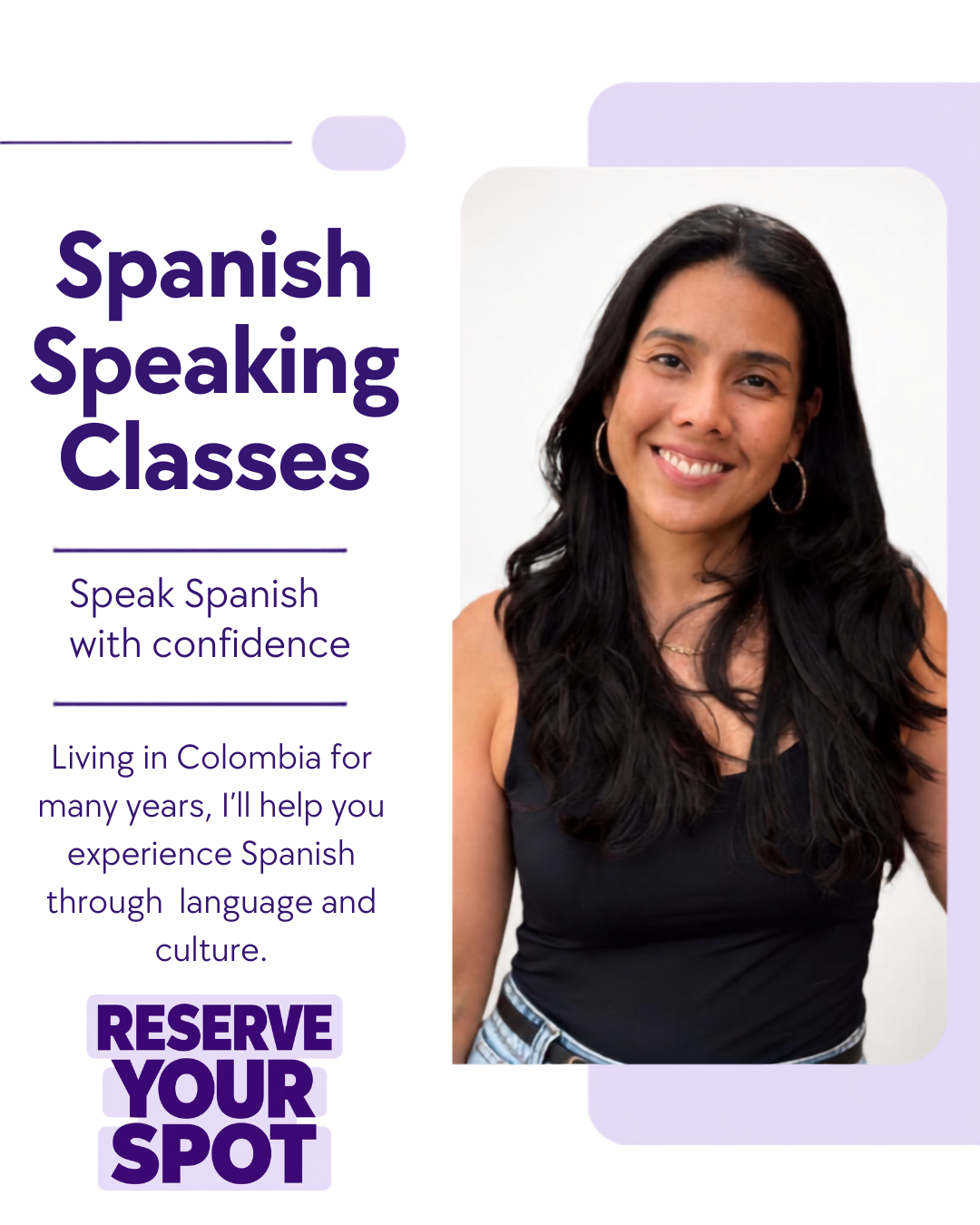
In my Spanish conversation classes, you’ll have a low-pressure space to use the Spanish you already know, build confidence, receive immediate feedback, and learn along the way. And since I’m based in Medellín, our conversations can also be an opportunity to learn about Colombian culture, music, food, travel, and everyday life.
No intensive course. No long-term package. Just real conversation and a chance to actually speak Spanish.
Book your class here: https://calendly.com/colombianjukebox/conversationpractice
El Chocó Needs Your Attention | 2026 Earthquake in Colombia
On August 10 at 7:34 AM, Colombia was struck with a massive 7.4 earthquake. The epicenter was in a small village in the department of El Chocó called San José del Palmar. The massive earthquake devastated cities as far as 300 kilometers away from the epicenter, like Cali, Manizales, and Pereira. And although these cities experienced catastrophic loses, they are also large cities that count on social infrastructure that allows for them to recieve rescue much quicker.
San José del Palmar and the surrounding areas that were affected didn’t recieve any rescue until four days after the earthquake. El Chocó is one of the country’s poorest and most neglected regions. And amidst all the adversities, this region has given Colombia a lot to be proud of.
El Chocó needs your attenion.
What Tourist Get Wrong About Medellín
A follow up to my most viral YouTube video.
What Language Do Bilingual People Actually Think In?
I am a native Spanish and Englisih speaker and I am often asked what language I think in.
Spanish is my first language. It was the language where my first safe-spaces were constructed in. It is not a coincidence that all my romantic relationships have been in Spanish.
English came later. As I grew older and more indepedent, it was how I consumed media and music. It was also the common language between friends. I also think about economic transactions in English.
After moving to Colombia in 2018, my bilingualism has helped me understand parts of myself that perhaps I wasn’t able to see while living in New York.
Sports Make Us Love Where We Come From
The Knicks won and I was far away from all the excitement going on in my city. I felt homesick during the entire NBA post season and it made me feel things I had never felt for New York. After moving to Colombia in 2018, I had to come to terms with my Americanness. It hasn’t always been easy. Typically, the demonym American is associated with skin color and privilege. I’ve learned that is not the case.
As much pushback as we may face from those in power, and as much as some may try to strip us of our identities and our rights, American culture, at its core, has always been inclusive. It has always made space for people who, for one reason or another, have felt like outsiders within their own.
Latest Posts
The Cornell 7 Problem
Learning about the Cornell 7 felt heavy. The information was coming in fast. I doomscrolled through a mix of triggering truths, people's own account of assault, and a lot of public outrage. I laid in bed and spiraled for a few days trying to process this new American...
Bendito Seas, Luis Miguel
Last week I found out that Luis Miguel will be returning to the stage. The very first thing I did after learning about his big return was to navigate to his Spotify profile, play the This Is Luis Miguel playlist, and listen to the first song on the the set, "La...
The Latin Grammys Are Not a Latin Music Celebration
I think I have found interest in award ceremonies once again. I had lost interest in them since the internet makes it possible for us to curate what we want to see. Rarely did any artist I like make it to red carpet events. But given the fury Bad Bunny caused in the...
Reserve Your Spot Now!